Tuesday, June 16, 2020

Orthodontic Braces

The Dental Braces or The Orthodontic Braces

Dental braces come under the Orthodontic branch of dentistry, that deals with the problems of crooked teeth (irregularly aligned teeth) and jaws that are positioned incorrectly. For some, it is nerve -wracking procedure, while others are overly excited about this treatment, specially the colorful braces. Dental braces not only improve the positions of the misaligned teeth, but they also improve the functioning and general health of the teeth and the structures around teeth. Let's see some details about the braces.
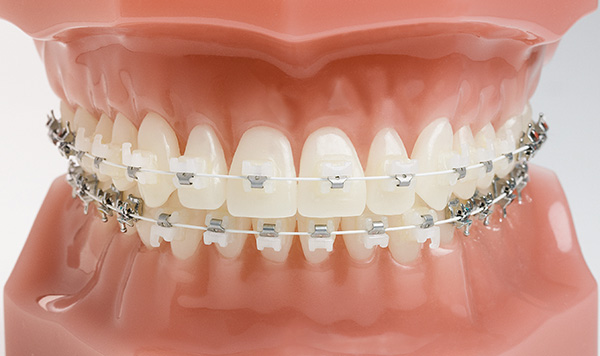

Dental Braces

How Do I Know That I Need Dental braces?

You will be needing braces if you have one or more of these following problems:
  • If one or both of your jaws are not in harmony with each other or with the face. One or both the jaws appear more prominent, sticking your teeth out and and making your lips bulging out. 
  • Spacing between all your teeth or just in the midline of the jaw.
  • If the teeth are so tightly apposed to each other that they overlap each other or they appear rotated.
  • If the bite is such that, there is space between the upper and lower front teeth, on closing the upper and lower jaws together.
  • If the bite is such that, the lower teeth go and hit the upper palatal surface and cause trauma, on closing the upper and lower jaws together.
  • If your Canines are coming in "Dracula" like fashion.
  • If the milk tooth has gone but the permanent tooth is not coming in that place. The permanent tooth might be present inside the bone that is not able to come out.                                                                                                 
  • Types Of Malocclusions (Misalignment)
                                                                                                  

What are Dental Braces?

Braces comprises of a set of components like the brackets, bands, archwires, ties, elastic chains, springs, head gears, etc. 
Brackets: The brackets are the most influential component of the braces. These are small rectangular attachments that are placed on individual teeth and they hold the archwire on that particular tooth. They act as a handle to hold the archwire to  move the teeth.
Bands : The bands encircle the tooth (mostly the molars) and the ends of the arch wire engages the bands securely and they provide anchorage for the whole system of braces. 
Arch Wires: It is the wire that is engaged in all the brackets and the bands. It is in  U- shape generally  and it acts as guide for all the misaligned teeth to set along the wire in a proper U- shape. 
Ties: These are the elastic or ligature ties that secure the archwire to the brackets.
Elastic chains: These are engaged from one tooth to another in order to pull the teeth close together.
Springs: These are used to open and close the spaces between the teeth. 
Head gears: These are the devices or attachments that are used to bring major teeth movements like moving the whole upper or lower teeth together, or moving or changing the angulation of the jaw bones.
There are a few, of the many components of braces.


Components Of Braces

Consultation And How The Treatment Is Planned?

The dentist first checks your teeth and jaws clinically, to see how the teeth are aligned naturally, what is the position of jaws and what corrections have to be done. Then he/she makes the molds (impressions) of your teeth  and may prescribe a few radiographs (x- rays) of the teeth, jaws and head region. After analysing the models and radiographs, the dentist arrives at the best treatment plan for your teeth and discusses with you. 

How Do Braces Work?

If we want to bring the teeth from the misaligned positions to well aligned positions, the teeth have to move in bone. Now, the braces apply small amount of continuous force on the teeth and this causes the bone to change its shape or we can say, the bone remodels and allows the teeth to move from one point to another. So, this is the way teeth move within the bone.


What Are The Various Types Of Dental Braces?

A variety of braces are available now a days. These could be metal braces (stainless steel), tooth colored braces (ceramic, acrylic), the lingual braces (placed on the inner surface of the teeth) or the invisible braces (invisalign). All types have their own advantages and disadvantages. Here the patients get an advantage of choosing their braces by seeing their looks and cost factor.


Types Of Braces

Colorful Braces


How The Braces Are Placed?

This could be your second appointment after consultation and treatment planning. This is going to be the longest appointment of all other future appointments, approximately about 45 mins to 1 hr time. 
Cleaning and conditioning of teeth is done and glue (bond) is placed, then the brackets are placed at proper measured positions. The placement of brackets is one of most critical steps. Correct placement is must for getting the best results from the treatment. After bracket placement, the first and the lightest wire is secured on the brackets. Then you are ready to click your first picture with braces and post on Instagram.

How Much Will Be The Total Duration Of This Treatment?

The duration of the treatment varies from individual to individual. How much is the severity of the problem, whether extraction has to be done or not, how much distance the teeth have to move, how's the health of the gums and bone supporting the teeth, is the patient regular or irregular about his visits, how well the patient follows the instruction, etc. 
In general, the duration varies between 6 months to 2 years for orthodontic treatments, depending upon the above mentioned factors.


How Often I'll Have To Visit The Clinic For The Future Sittings?

In every sittings, the dentist might change the wires and place some or the other new components like elastics, springs, head hears, etc, in order to move your teeth in a desired way. Your dentist might want to see you every 3-4 weeks from the previous appointment, because 21 days is the approximate time that takes for the bone to remodel and the teeth to move under the applied force in the previous appointment.


Is The Whole Procedure Of Braces Painful?

Just after the appointment, you could have some tight, pressure like feeling or others might feel some soreness in mouth, but that goes away after 2-3 days of the appointment. If discomfort is more or some pain is there then any simple painkiller tablet (tab. Brufen 600 or tab Paracetamol 500) will help. And if pain is too much, then talk to your dentist.


What Are The Oral Care Instructions With Braces?

Best possible oral hygiene is mandatory with dental braces. Your dentist will tell you about the brush  (Orthodontic brushes) to be used, the toothpaste (Amflor toothpaste) and mouthwash (Amflor mouthwash) to be used. And the dentist will also clean your teeth with cleaning scaler, as it might sometimes be difficult for you to clean your teeth between the brackets and wires.


What Dietary Precautions Do I Need To Take With Braces?

With braces comes a lot of dietary restrictions and precautions. Avoid all sticky (chewing gums, sticky toffees and chocolates) and hard food, like biting on a whole apple. You can have it by cutting into small pieces. Even after taking all precautions, the brackets tend to come out. In that case your dentist will be fixing it again, but that delays the procedure by 1-2 sittings. 


Do I Need Retainers After The Braces Are Removed?

A big "Yes" in most of the cases. Retainers are the fixed or removable appliances given after removing braces. They help in holding and retaining the teeth in their new well aligned positions, to which they have moved with the help of braces, from the old misaligned positions.


How Much The Braces Will Cost To Me?

In India the cost of braces would vary between  Rs.50,000/- to Rs. 3,00,000/- depending upon the braces that you choose. And in other countries its approximately around $ 5000. At some places the insurance carriers cover some part of the total cost of the orthodontic treatment, but not in India.

Monday, April 17, 2017

Dental Implants

INTRODUCTION

Since childhood we get so many instructions like do not eat lots of sweets and chocolates, brush your teeth properly, have fibrous diet, etc.etc. in order to keep our teeth healthy, strong and long lasting. But unfortunately at some stage of life we all have to face the awful problem of teeth loss as it hampers eating as well as our facial esthetics.
So, if we plan to replace our missing teeth we have 3 options, removable teeth (removable dentures), bridges (fixed teeth) and dental implants.
Removable teeth are highly intolerable, they have mobility in mouth, they sometimes come out while talking or laughing creating embarrassing situations for patients.
Bridges are fixed but for fabricating a bridge we have to trim the teeth adjacent to the space created by the missing tooth,so it damages our natural and healthy teeth.
Now we are left with the option of implants.Implants are tooth root like posts that are placed in jaw bones. They serve as tooth root and the crown or the tooth portion that we see in our mouth is fabricate over it.


Fig 1.Image showing implant in the bone and the crown over it.


Why should I opt for Dental Implants?

No replacement is better than our natural teeth. But after losing natural teeth, implants is the best replacement available. Let's see how-

- It restores the form and functions of our oral cavity. We can eat normally as we used to with our natural teeth. There would be no restriction on food.
- It prevents our cheeks and lips from sagging inside which always happens after our teeth are lost. So, it restores our smile and beauty.
- When natural teeth are lost, the jaw bones starts resorbing down in that particular area and makes our jaws weak and prone to fractures. And as the implants are placed in jaw bones they prevent this resorption of bone.
- No need to do unnecessary cutting of other healthy teeth for making bridges or more embarrassment due to your removable teeth. Your pets will not run away with your removable teeth.
- Since the implants are exactly like our natural teeth in form and function, we become more comfortable and our speech becomes more confident like it was with natural teeth.
- And yes, say good bye to cavities.
- The results are more predictable and prognosis is excellent. One day we all die but the implants remain intact in the jaw bones forever.
- Even if you have to replace one tooth, multiple teeth or the whole jaw's teeth, it can be done with implants. Se Fig 2 and 3.

Fig 2.Single tooth replaced 
Fig 3.Whole denture is fabricated over 6 implants


Am I the right candidate for implants?

- People willing for long term fixed teeth.

- When adjacent teeth not in a condition to support a bridge and patient is not willing for a removable denture.

- People with no immunological disorder like diabetes and blood pressure are better candidates for dental implants, though there being no definite contraindication.


Will implants cause any allergic reaction in my body?

We all have this query in our mind that the implants are like foreign material in our body and can cause some allergic reaction. But the answer is "No". The implants don't cause any allergic or foreign body reaction in our body because they are made of "Titanium". Titanium is a metal that is completely inert in our body. It is categorized under biocompatible materials. These are the material which do not cause any reaction in our body.


How is the Implant procedure performed?

It is a simple procedure performed by your dental surgeon. Generally it is done in 3 stages. See Fig 4.

1. Implant placement: The first stage is surgical. Please don't get scared with the word "surgical". Its a very small procedure done under local anesthesia. In this stage, the doctor makes a small cut in your gums and with the help of a drill the implant is placed in your jaw bone. And then the gums are sutured back.
After this, the implant is left for 2.5-3 months in the bone untouched. In this rest period the implant osseointegrates (osseo- bone, integrates- fuses) with the bone.
2. Abutment placement: In this stage, the gums are opened again and a small attachment known as Abutment is screwed over the implant. Then a weeks time is given to gums to settle around the abutment.
3. Crown placement: In this third and final stage, the impression of the jaw is taken and crown is fabricated over the implant and abutment structure.


Fig 4. Three sections showing the 3 stages of implants procedure.


What precautions do I have to take after getting an Implant done?

1. Maintenance of proper oral hygiene is must.

2. Visit your dentist every 6 months for check-up.


So, we got to know that after losing teeth, implants are the best option available for us for replacement of our missing teeth as they restore the form and function of our mouth, restore our looks and smile, do not cause any reaction in our body and they stay with us lifelong.

Friday, March 31, 2017

What Is Teeth Cleaning? Does Cleaning My Teeth Make Them Weak?

           Teeth Cleaning / Scaling or Oral Prophylaxis is simply a procedure of removing yellow and brown deposits on and around our teeth. It is a very essential part of maintaining our oral and general health.
           Most of us won't be knowing that our mouth is the mirror of our general health. By examining the oral cavity we can get to know a lot about someone's health, the diseases they have, the medications they are taking and a lot more. And the most important thing, the germs in our mouth can cause various kind of illness in our oral cavity as well as in our whole body ranging from fever, septicemia to serious illness like heart diseases.So, maintaining a good oral hygiene is really important for all of us.
          We dentists are observing that our Indian population is carrying a major myth about teeth cleaning or scaling procedure. And the myth is - "Cleaning teeth or Scaling make our teeth weak and they become mobile and ultimately fall at an early age".
          There's a big "NO" for this myth. "NO, THE TEETH DO NOT BECOME WEAK AND FALL BECAUSE OF CLEANING OR SCALING" Instead, our teeth become healthy and strong!
          The explanation to this goes as follows, in layman terms. when our teeth are dirty, when there are a lot of yellow and brown deposits on and around our teeth, the bacterial growth and multiplication is going on rapidly in our oral cavity in those deposits. As these bacteria grow, they produce acids and some other harmful metabolic products which in turn cause decay and dissolution of our teeth and the bone surrounding the teeth. These products keep on dissolving the bone and gradually the bone that holds and supports our teeth dissolves and our teeth become weak, they become mobile and ultimately they fall. So, in order to prevent our teeth from becoming weak and falling, we should always maintain our oral hygiene by getting our teeth cleaned by dentists, being regular in two time brushing the teeth and using other oral hygiene aids like dental floss, mouthwash,etc.


                      The deposits are being removed from the teeth with the help of scaler.                          

Before and after cleaning
               Therefore, we can see how 1) these deposits spoil our teeth and bones, 2) teeth cleaning or scaling is always helpful and never harmful for our teeth and also 3) it keeps our body healthy.

Want To Make Your Teeth Look whiter?

Teeth Whitening  or Bleaching is the most marketed or demanded procedure in cosmetic dentistry now-a-days. It is a procedure which makes our teeth appear white. We all want our teeth to glow and look beautiful like pearls and give us a beautiful and attractive smile.

Before and after bleaching.

 Why do we need to go for tooth whitening procedure?
 Simple, the answer is 'because our teeth look yellow or brown or you can say stained."
 Now , there are a number of causes which make our teeth discolored or stained. They are as follows:

 1) Internal factors causing Intrinsic stains
  • Some discoloration is present by birth: When our teeth erupt, they are already discolored     (yellowish, brownish). This happens if the mother takes antibiotics like tetracycline or doxycycline at the time of gestation or if children take these antibiotics before 8 yrs of age.
  • High level of fluoride in drinking water of the locality causes fluorosis. 
  • Trauma to tooth also causes internal bleeding in tooth leading to intrinsic stains like red, brown, green stain.
 2)  External factors causing Extrinsic stains
  • Food items: Tea, coffee, cola containing drinks, etc
  • Tobacco and betel nut chewing, smoking.
  • Plaques and calculus.  
  • Mouthwash stains

 Am I the right candidate for teeth whitening?

      Yes, you can go for teeth whitening procedure if :
  • You don't have highly sensitive teeth.
  • Your gums are not receding.
  • You are not allergic to hydrogen peroxide or sodium carbamide.
  • You don't have any carious decay or fractured tooth (go for filling of teeth before whitening)

 What are the advantages of bleaching?
  • Teeth bleaching or whitening gives you amazingly beautiful white teeth, which makes your smile beautiful.
  • It helps in boosting your confidence and adds an edge to your personality, specially if you  have to give some presentations, apply for modelling or acting, if you are going to get married,  or attend some special function.
      Remember if your smile looks beautiful, you look beautiful...the world becomes a beautiful place for you. And with the whole new confidence you can win the world.


What are the limitations of teeth whitening?
   Teeth whitening or bleaching can not be done on teeth which are restored such as filling, crowns, veneers, bridges, because bleach can not alter the color of these materials.


What are the side effects of bleaching? 
   Bleaching causes tooth sensitivity and some gum irritation for a few days, which goes away easily with the help of sensitivity tooth pastes, mouth rinses.


 How is teeth whitening done?
   There are two ways of bleaching teeth:

   1) In Office Bleach: In this technique, you go to your dentist and the dentist uses a bleaching paste containing Hydrogen Peroxide to whiten your teeth. A gum protecting layer would be applied followed by the bleaching paste. The dentist can also use a laser light for whitening after applying the paste.


A gum protecting gel is applied before applying the bleach paste.

   2) Home Bleaching: In this technique, you buy over the counter bleach kit and use it yourself to bleach your teeth. You will get a custom made tray that can fit around your teeth and a bleaching paste. You have to put that paste in the tray and then wear that tray on your teeth. Since the tray is custom made, it may not fit properly on your teeth and the paste may cause irritation on your gums.


Home bleaching kit containing trays and bleaching paste.

 It is generally advisable to go for In Office Bleaching because the procedure is done by specialist and under proper supervision. 


How to take care of my teeth after bleaching is done?
      After bleaching you have to keep a few things in mind:
  • Maintain proper oral hygiene by brushing your teeth twice daily with a soft bristle brush, interdental brushes, dental floss, etc.
  • Do not use chlorhexidine containing mouth wash continuously for more than 2 weeks.
  • Try to reduce the intake of stain causing food items listed above.

 What would be the follow up schedule after bleaching?
     The truth about bleaching is that it is never permanent. The teeth may change color again after a few months or year. For maintaining the whiteness you'll have to go for some cleaning, polishing and touch ups from time to time.

                                                           Happy Tooth Bleaching :)


Baby Teeth And Teething: How To Comfort My Baby?

WONDERFUL! YOUR BABY IS TEETHING, A LANDMARK SHOWING HEALTHY GROWTH.

Teething is a collective term given to signs and symptoms occurring when a new tooth emerges in the oral cavity cutting through the gums. Generally it's used for problems occurring when teeth start to erupt in infants.


Baby teeth erupting.
When does it start?

The age range for the milk teeth to erupt is from 6 months to 3 years. But it can even start at 2-3 months of age and sometimes, the baby may even be born with 1 or 2 teeth in mouth. And by the age of 3 yrs, the baby would be having the complete set of milk or primary teeth.

The eruption sequence of milk teeth is as follows:


What are the symptoms of teething?

The baby can become highly irritable, cranky and fussy. Baby may even stop eating and drinking. We can see red and swollen gums, saliva drooling, red rash on chin or cheeks because of dribbling saliva, restlessness, sleeplessness and mild fever in some cases can occur in the range of 100–101 °F (37.8–38.3 °C).
And some lucky babies may even go symptom less.


Babies become cranky.

How to prevent the symptoms or how to soothe the baby?


It becomes a little tough time for both the baby and the parents. The parents need to have a lot of patience in order to deal with this situation and provide comfort to the baby.

  • Gently massaging or rubbing the gums with clean fingers can help. Babies respond to massage nicely.
  • We can give special toys called teethers to chew on, they are made of soft, non-toxic plastic or rubber safe for babies, this is because chewing aids in tooth eruption.

Baby biting on a teether.
  • We can give something clean and cold such as cold washcloth to the baby to chew on. Cold things help in suppressing the discomfort. Care should be taken that cold cloth should not be given for a long time.
  • We can also give some medications like pain killers and anti-pyretics for fever but ONLY after consulting the doctor. 
At this time babies have the tendency to put anything in their mouth and chew like their finger, your finger or just any object. So care should be taken that anything that is small and can chock the baby should be always kept out of reach of the babies like coins, small plastic objects, wire or any such dangerous things.

Baby biting on it's own finger and enjoying.

When to call a doctor?

Although it's a normal condition and consultation is not required but you should always consult if the symptoms or fever is aggravating.
                                        :) :) :) :) :)

Invisible Braces...The Aligners


    Yes, we all desire to have a beautiful smile and we all have heard of dental braces, the wires and brackets to correct our crooked teeth fulfilling our desires of beautiful smile. But as we know the braces are so repulsive, so uncomfortable and so disturbing that its very difficult for us to tolerate them. So, again with the union of medical science and our latest technologies we have come up with a new system for correcting the crooked or malaligned teeth and these are what we call as The Invisible braces or the ALIGNERS. Clearpath and Invisalign are the two world famous aligner fabricators.


ALIGNER

  The aligners also exert the same amount of forces as the traditional braces and cause tooth movements. In aligner treatment we provide a set of aligners which are like strong transparent plastic trays which snugly fit over all the teeth and the patient has to wear them. The set may contain 10-25 aligners depending upon the severity of the case. Each aligner is worn for 2 weeks and then the patient moves on to the next aligner. Each aligner causes a very little amount of tooth movement, and gradually the teeth keep on moving as the patient wears the whole series of aligner. The pt has to wear the aligner for atleast 20 hrs a day. It will be removed only for eating, brushing and flossing. And finally when the teeth attain the desired position, we give retainers. The total treatment time may range from 8 months to 2 years.


SET OF ALIGNERS WITH SEQUENCE NUMBERS


    Aligners are given only after completion of the growth phase, so its given in adults only and not in children. A proper diagnosis of the case with proper treatment plan is needed by an expert doctor. A series of photographs both intraoral and extroral, radiographs, teeth models and bite registration are required to make the diagnosis and to check the feasibility of your case with the aligners.


ALIGNER ON PATIENT'S TEETH


        Nobody knows and your crooked teeth become straight and smile beautiful :)